
Should You Take Biologics for Rheumatoid Arthritis? 10 Evidence-Based Reasons
If you have been diagnosed with Rheumatoid Arthritis, chances are you have already heard the word biologics in your treatment discussion. And for many people, that moment brings fear, confusion, and hesitation.
Biologics for rheumatoid arthritis are often misunderstood, especially after reading online warnings about infections, immune suppression, or cancer risks. It is easy to feel overwhelmed and think, “Maybe my symptoms are not bad enough yet,” or “Maybe I should try natural approaches first.”
But delaying effective treatment can allow irreversible joint damage to progress silently.
In this guide, you will learn 10 evidence-based reasons why biologics are considered one of the most important advancements in rheumatoid arthritis care. This is not about fear. This is about understanding how to make informed, science-based decisions that protect your joints, your energy, and your long-term quality of life.
What Are Biologics in Rheumatoid Arthritis?
Biologics are a class of targeted therapies designed to block specific parts of the immune system that drive inflammation in rheumatoid arthritis.
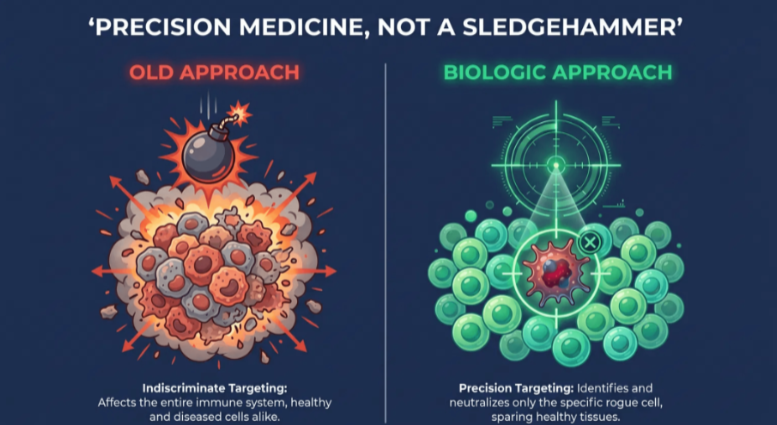
Unlike older medications that broadly suppress the immune system, biologics are precision treatments that focus on specific inflammatory pathways.
Common targets include:
Tumor necrosis factor (TNF)
Interleukins (IL-6, IL-1)
B cells or T cells are involved in immune overactivity
Key idea:
Biologics do not “shut down” your immune system. They recalibrate it.
10 Evidence-Based Reasons to Start Biologics
1. Strong real-world safety data
One of the biggest fears patients have is safety. The internet often highlights worst-case scenarios, but large real-world studies show a different picture.
Most patients on biologics tolerate them well long-term. Common side effects are usually mild, such as:
Injection site redness
Mild upper respiratory infections
Temporary fatigue after dosing
Serious complications are uncommon and are carefully monitored in clinical practice.
The key takeaway: safety is continuously tracked, and biologics are widely used under specialist supervision.
2. Preventing irreversible joint damage
Rheumatoid arthritis is not just pain. It is an inflammatory process that gradually destroys cartilage and bone.
Once damage occurs:
It cannot be reversed
Joint deformities can develop
Function may be permanently reduced
Biologics help slow or stop this inflammatory damage early, preserving joint structure before it is lost.
3. Precision targeting, not full immune suppression
A common misconception is that biologics “wipe out” immunity. That is not accurate.
Think of the immune system as an army. In rheumatoid arthritis, only specific “units” become overactive and attack the joints.
Biologics:
Target specific inflammatory signals
Leave most immune defenses intact
Maintain your ability to fight everyday infections
This makes them very different from older broad-acting medications.
4. The window of opportunity matters
Early treatment in rheumatoid arthritis is critical.
Research shows that delaying effective therapy even within the first several months can:
Increase risk of permanent damage
Reduce the chance of remission
Allow inflammation to become harder to control
This early phase is called the “window of opportunity,” where biologics can make the greatest long-term difference.
5. Untreated disease is more dangerous than treatment
When comparing risks, it is important to compare:
Medication side effects vs
Ongoing uncontrolled inflammation
Untreated rheumatoid arthritis can lead to:
Severe joint destruction
Long-term disability
Reduced life expectancy
Fatigue and systemic inflammation affecting multiple organs
In most cases, uncontrolled disease poses a higher risk than well-managed biologic therapy.
6. Reduced cardiovascular risk
Rheumatoid arthritis increases systemic inflammation, which affects more than just joints.
Chronic inflammation is linked to:
Higher risk of heart disease
Increased risk of stroke
Blood vessel damage over time
Studies show that reducing inflammation with biologics may help lower cardiovascular risk in many patients.
7. Improved function and return to daily life
One of the most meaningful benefits of biologics is functional improvement.
Patients often experience:
Better grip strength
Reduced morning stiffness
Easier movement in daily activities
This translates into real-life improvements such as:
Returning to hobbies
Improved work performance
Greater independence
8. Fatigue and brain fog improvement
Fatigue in rheumatoid arthritis is not just tiredness. It is driven by inflammatory chemicals called cytokines.
Biologics reduce these inflammatory signals, which can lead to:
Improved energy levels
Less mental fog
Better sleep quality
Improved daily endurance
This is often one of the earliest noticeable benefits.
9. Close monitoring ensures safety
Starting biologics does not mean being left alone with a prescription.
Patients are closely monitored with:
Regular blood tests
Infection screening
Liver and kidney function checks
Disease activity tracking
This structured follow-up helps detect any issues early and adjust treatment safely when needed.
10. Protecting your long-term quality of life
Perhaps the most important reason is not just medical. It is personal.
Rheumatoid arthritis can slowly take away:
Mobility
Independence
Energy
Everyday enjoyment
Biologics aim to preserve the life you want to live, not just reduce lab numbers.
The goal is long-term function, freedom, and control over the disease.

How Biologics Compare to Other Treatments
Treatment for rheumatoid arthritis often follows a stepwise approach:
NSAIDs for symptom relief
DMARDs like methotrexate for disease control
Biologics for targeted immune modulation when needed
Biologics are often introduced when:
Disease remains active despite standard therapy
There is a high risk of joint damage
Symptoms significantly affect quality of life
Common Concerns About Biologics
“Do biologics increase cancer risk?”
Current evidence does not show a large increase in overall cancer risk when biologics are used appropriately and monitored.
“Will I get infections more easily?”
There may be a slightly increased risk of infections, which is why screening and monitoring are essential.
“Are biologics lifelong?”
Not always. Treatment is individualized and may change based on disease control.
Frequently Asked Questions (FAQ)
-
Yes, biologics are widely studied and considered safe when prescribed and monitored by a rheumatologist.
-
Some patients notice improvement within weeks, while full benefit may take a few months.
-
Biologics can significantly slow or stop progression in many patients when started early.
-
Not always. Treatment duration depends on disease activity and response.
-
Symptoms may return, and inflammation can increase again, so decisions should always be made with your rheumatologist.
Biologics for Rheumatoid Arthritis represent one of the most effective ways to control inflammation, prevent joint damage, and improve long-term quality of life.
The decision to start biologics should never be driven by fear alone. It should be based on evidence, disease severity, and a clear understanding of risks versus benefits.
When used appropriately and monitored carefully, biologics can help protect your joints, reduce systemic inflammation, and restore function.
The most important step is having an informed conversation with your rheumatologist about whether biologics are right for your stage of disease.
Do not let uncertainty delay your treatment decisions. Talk to your rheumatologist about whether biologics are appropriate for your rheumatoid arthritis and what options may fit your condition.
If you are in North Carolina and looking for a rheumatologist who can help you understand your symptoms and create a clear, personalized treatment plan, you can book an appointment at www.empoweredarthritis.com for a comprehensive evaluation and individualized care plan tailored to you.
If you are outside North Carolina or outside the United States but still want guidance and support, you are welcome to join my free, exclusive community. Inside, you will be able to connect directly with me, interact with other rheumatoid arthritis warriors who truly understand what you are going through, and join future group calls where we discuss real-life RA challenges, treatment options, lifestyle strategies, flare management, medications, and more.
This community is designed to give you education, encouragement, and a safe space to ask questions without feeling alone in your journey. I would be happy to help provide clarity, answer your questions, and guide you toward building a plan so you can feel more confident and informed about your next steps.
I also have free resources available for you:
📘 Grab a copy of The Holistic Rheumatoid Arthritis Guide for step-by-step support
🥤 Download my FREE Rheumatoid Arthritis pain relief smoothie recipe
And if you want a deeper explanation, watch the full YouTube video where I break this down in detail so you can understand exactly how biologics work and why they matter.
