Prednisone vs Methylprednisolone: Which Works Faster?
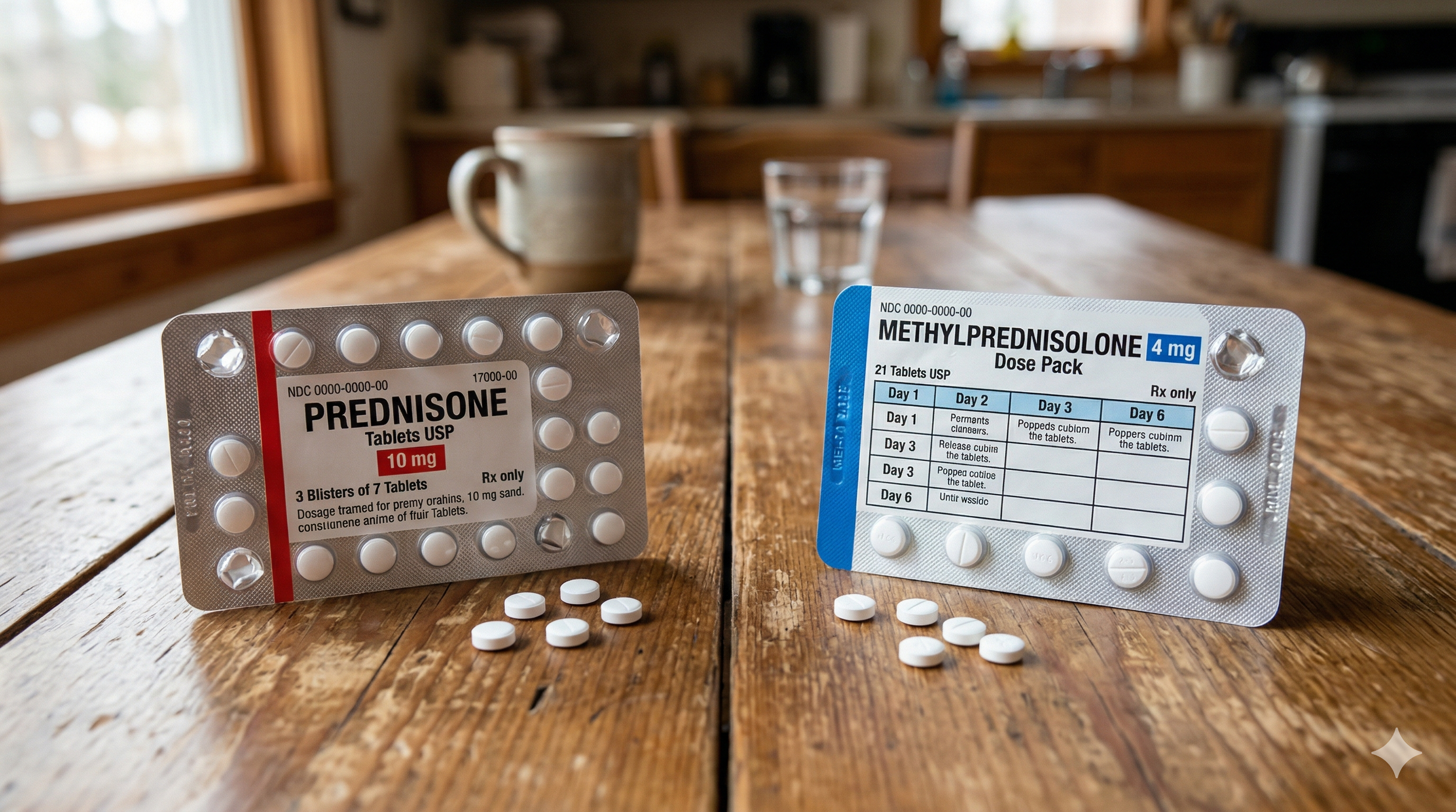
If you’ve been prescribed prednisone or methylprednisolone, you may be wondering: are these steroids the same, and which one works faster?
This is one of the most common questions in rheumatoid arthritis care, especially during painful flares when you need relief quickly. While both medications are powerful steroids, they are not identical, and choosing the right one can directly impact how fast you feel better and how your body responds.
In this guide, I’ll break down the key differences between prednisone and methylprednisolone and how each steroid works so you can feel more confident discussing your treatment plan with your doctor.
What Are Steroids and Why Are They Used in Rheumatoid Arthritis?
What is a steroid?
A steroid (specifically a corticosteroid) is a medication designed to reduce inflammation and suppress an overactive immune system.
In rheumatoid arthritis, your immune system mistakenly attacks your joints—leading to:
Pain
Swelling
Stiffness
Joint damage over time
Steroids help calm this immune response quickly.
Why doctors prescribe steroids
Steroids like prednisone and methylprednisolone are commonly used for:
1. Flare management
When symptoms suddenly worsen, steroids help reduce inflammation fast.
2. Bridge therapy
When starting long-term medications (like DMARDs), steroids help control symptoms while waiting for those drugs to take effect.
How fast do steroids work?
One major benefit of steroids is speed:
Relief can begin within hours to days
Significant improvement often occurs within 1–3 days
This is why they are often used in urgent or severe situations.
Prednisone: What You Need to Know
What is prednisone?
Prednisone is one of the most commonly prescribed oral steroids.
Taken as a pill
Widely used for chronic inflammatory conditions
Requires activation in the body
How prednisone works
When you take prednisone, your body converts it in the liver into its active form called prednisolone.
This means:
It may take slightly longer to fully activate
Liver function plays a role in how effectively it works
When prednisone is typically used
Doctors often prescribe prednisone for:
Mild to moderate rheumatoid arthritis flares
Tapering doses after a flare
Short-term symptom control
Occasionally, low-dose long-term maintenance
Pro tip for taking prednisone
To reduce side effects:
Take it with food to minimize stomach irritation
Take it in the morning to reduce sleep disruption
Methylprednisolone: What You Need to Know
What is methylprednisolone?
Methylprednisolone is another powerful steroid but with key differences:
Available as IV (intravenous), injection, or oral form
Often used in more acute or severe cases
Already in its active form
Why methylprednisolone works faster
Unlike prednisone, methylprednisolone does NOT need liver conversion.
This means:
Faster onset of action
More predictable effect
Better option in urgent situations
Common forms of methylprednisolone
IV steroid (hospital or ER use)
Joint injection (targeted relief)
Oral taper (Medrol dose pack)
When methylprednisolone is used
Doctors typically choose methylprednisolone for:
Severe rheumatoid arthritis flares
Emergency situations
Hospital treatment
Local joint injections for targeted inflammation
Prednisone vs Methylprednisolone: Key Differences
1. Speed of action
Methylprednisolone: Faster (already active)
Prednisone: Slightly slower (needs liver conversion)
2. Potency
Methylprednisolone is ~1.25x stronger than prednisone
This means smaller doses can have a stronger effect.
3. Route of administration
Prednisone:
Oral tablet only
Methylprednisolone:
Oral (Medrol dose pack)
IV (hospital use)
Injection (into joints)
4. Use cases

5. Liver considerations
Prednisone: Requires liver activation
Methylprednisolone: Already active (better if liver function is impaired)
6. Duration in the body
Both steroids have a similar half-life, meaning they stay in your system for a comparable amount of time.
Which Steroid Works Faster?
The short answer:
👉 Methylprednisolone works faster than prednisone
Why?
It is already in its active form
It can be given intravenously
It bypasses the need for liver conversion
When speed matters most
Your doctor may choose methylprednisolone if:
You have severe joint swelling
Pain is intense and disabling
You are in the ER or hospital
Rapid control is critical

Side Effects: What Both Steroids Share
Both prednisone and methylprednisolone have similar side effects because they are in the same class.
Common side effects include:
Weight gain
Trouble sleeping
Mood changes
Increased infection risk
Elevated blood sugar
Bone thinning (osteoporosis)
Important safety principle
Doctors follow one key rule:
👉 Use the lowest dose for the shortest time possible
Questions to ask your doctor
Before starting a steroid, consider asking:
Do I really need this steroid?
What dose will I take?
How long will I be on it?
Is there a tapering plan?
How to Use Steroids Safely in Rheumatoid Arthritis
To reduce risks while still getting benefits:
Do:
Follow your prescribed dose exactly
Take medication consistently
Communicate side effects early
Avoid:
Stopping suddenly without guidance
Taking higher doses than prescribed
Using long-term without monitoring
FAQ: Prednisone vs Methylprednisolone
-
Yes. Methylprednisolone is about 1.25 times more potent than prednisone.
-
Because it is already in its active form and does not need to be processed by the liver.
-
In some cases, yes—but usually at low doses and under close medical supervision due to side effects.
-
Mild flare → Prednisone
Severe flare → Methylprednisolone
-
Yes. Both medications share similar side effects since they belong to the same steroid class.
Choosing the Right Steroid Matters
Both prednisone and methylprednisolone are powerful tools in managing rheumatoid arthritis, but they are used in different situations.
Prednisone is ideal for ongoing or tapering treatment
Methylprednisolone is preferred for rapid, severe flare control
Understanding these differences helps you:
Make informed decisions
Have better conversations with your doctor
Feel more in control of your treatment
But here’s the most important part: don’t try to figure this out alone.
Make sure you talk to your rheumatologist about which steroid is right for you, especially if your symptoms are not improving or you’re unsure about your treatment plan.
If you're in North Carolina and looking for a rheumatologist who will truly listen and give you clear answers about your symptoms, you can book an appointment atwww.empoweredarthritis.com
You’ll receive a comprehensive evaluation and a personalized care plan tailored specifically to you.
If you’re outside North Carolina or even outside the United States but still want guidance, you can schedule a one-on-one coaching session with me. I’d be happy to answer your questions, provide clarity, and help you create a plan so you can feel more confident about your next steps.
And if you’re not quite ready for an appointment yet, I’ve got you covered with free resources:
📘 Grab a copy of The Holistic Rheumatoid Arthritis Guide for step-by-step support
🥤 Download my FREE Rheumatoid Arthritis pain relief smoothie recipe
You deserve to feel better and to understand exactly why you’re taking the medications you’ve been prescribed.
