
In rheumatoid arthritis, one of the most common sources of confusion is when your ESR and CRP results come back “normal,” yet your pain, stiffness, and fatigue are very real. Many patients assume this means their disease is inactive—but that is not always true.
Understanding rheumatoid arthritis, ESR, and CRP is essential because these two blood tests are often used to measure inflammation, but they do not always reflect what you feel in your body. Some people have high pain with normal labs, while others have elevated labs with minimal symptoms.
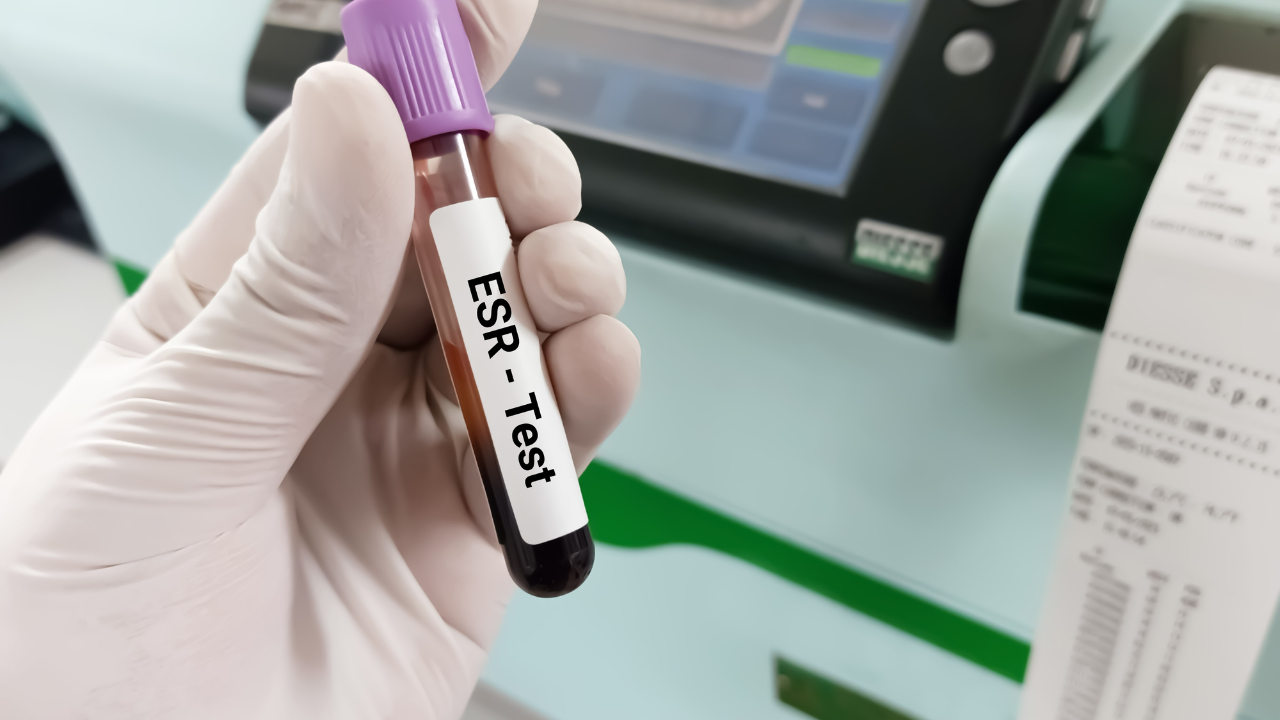
What Is ESR in Rheumatoid Arthritis?
ESR (erythrocyte sedimentation rate) measures how quickly red blood cells settle at the bottom of a test tube over time.
In rheumatoid arthritis, inflammation increases certain blood proteins like fibrinogen. These proteins make red blood cells stick together and fall faster, leading to a higher ESR.
Key point:
ESR reflects overall inflammation trends, not real-time changes.
Think of ESR as:
A slow-moving inflammation indicator
A “weekly summary” of your body’s inflammation
A test influenced by multiple factors, not just RA
Other causes of high ESR:
Aging
Anemia
Kidney disease
Pregnancy
Chronic infections
👉 This is why ESR alone cannot confirm a rheumatoid arthritis flare.
What Is CRP in Rheumatoid Arthritis?
CRP (C-reactive protein) is produced by the liver in response to inflammation. Unlike ESR, CRP changes rapidly based on current inflammation levels.
In rheumatoid arthritis, CRP often rises quickly when inflammation is active and drops quickly when it improves.
Key point:
CRP reflects real-time inflammation activity.
Think of CRP as:
A daily inflammation tracker
A fast-response “alarm system.”
A more immediate marker compared to ESR
Other causes of high CRP:
Infections
Obesity
Smoking
Other inflammatory conditions
👉 CRP is sensitive, but not specific to rheumatoid arthritis.
ESR vs CRP in Rheumatoid Arthritis: Why They Don’t Match
One of the most confusing situations in rheumatoid arthritis is when ESR and CRP don’t align.
Common patterns:
1. High CRP, normal ESR
This usually means:
Early or active inflammation
A recent flare started
CRP has reacted faster than ESR
👉 CRP changes quickly, ESR lags behind
2. High ESR, normal CRP
This may indicate:
A past or resolving flare
Residual inflammation
Non-inflammatory factors (like anemia or age)
👉 ESR stays elevated longer even after CRP normalizes
Why ESR and CRP Matter in Rheumatoid Arthritis but Are Not Enough
While ESR and CRP are useful in rheumatoid arthritis monitoring, they have important limitations.
They do NOT measure:
Nerve sensitivity
Fibromyalgia pain
Osteoarthritis overlap
Functional disability
Fatigue severity
This is why:
Some patients feel severe symptoms even when:
ESR is normal
CRP is normal
And others feel well even when:
ESR and CRP are elevated
👉 Blood tests are only part of the picture, not the full diagnosis.
Why Your Rheumatoid Arthritis Pain Can Exist with Normal ESR and CRP
This is one of the most important clinical realities in rheumatology.
Possible explanations:
1. Blood markers are not always sensitive in RA
A significant portion of people with rheumatoid arthritis may have:
Normal ESR
Normal CRP
Active symptoms
👉 This is called “seronegative or low-marker inflammation pattern.”
2. Fibromyalgia overlap
Fibromyalgia is common in RA and causes:
Widespread pain
Fatigue
Sleep disturbance
But:
ESR is normal
CRP is normal
3. Mechanical or degenerative pain
Pain may come from:
Osteoarthritis
Joint damage from past RA inflammation
4. Central sensitization
The nervous system becomes more sensitive to pain signals, amplifying symptoms without active inflammation.
How Rheumatologists Interpret ESR and CRP in RA
In clinical practice, rheumatoid arthritis management is never based on ESR or CRP alone.
Doctors combine:
Symptoms (pain, stiffness, fatigue)
Physical examination
Joint swelling assessment
Imaging (ultrasound/X-ray/MRI)
Lab markers (ESR and CRP)
Key clinical principle:
ESR and CRP are guides, not definitions of disease activity.
ESR vs CRP Summary Table

FAQ: ESR and CRP in Rheumatoid Arthritis
-
CRP is more sensitive to current inflammation, while ESR reflects longer-term trends. Both are used together.
-
Yes. Many patients with active RA may still have normal inflammatory markers.
-
This may indicate older inflammation, anemia, or a resolving flare.
-
This often suggests early or acute inflammation that ESR has not yet reflected.
-
No. They support diagnosis but cannot confirm rheumatoid arthritis alone.
What Your ESR and CRP Really Mean in RA
In rheumatoid arthritis, ESR and CRP are helpful tools, but they are not the full story. They provide insight into inflammation trends, not the complete experience of your disease.
You can have:
Normal ESR and CRP with real pain
Elevated ESR and CRP without severe symptoms
Mismatched results that still require medical interpretation
The most important takeaway is this: 👉 Your symptoms are real, even when labs are normal.
ESR and CRP are guides, not judgments of your condition.
Understanding rheumatoid arthritis, ESR, and CRP is important, but the most critical takeaway is this:
Your labs are only one piece of the puzzle. Your symptoms are equally important.
If your ESR and CRP are normal but you still have pain, it does not mean your symptoms are imaginary or insignificant. It means your condition needs a broader evaluation beyond blood tests.
The goal is not to chase numbers, but to understand your body fully and create a treatment plan that reflects both your labs and your lived experience.
Talk to your rheumatologist about your symptoms and lab results for personalized interpretation.
If you are in North Carolina and looking for clear answers about your symptoms, you can book an appointment a twww.empoweredarthritis.com for a comprehensive evaluation and a personalized care plan tailored to you.
If you are outside North Carolina or outside the United States but still want guidance and support, you are welcome to join my free, exclusive community. Inside, you will be able to connect directly with me, interact with other rheumatoid arthritis warriors who truly understand what you are going through, and join future group calls where we discuss real-life RA challenges, treatment options, lifestyle strategies, flare management, medications, and more.
This community is designed to give you education, encouragement, and a safe space to ask questions without feeling alone in your journey. I would be happy to help provide clarity, answer your questions, and guide you toward building a plan so you can feel more confident and informed about your next steps.
I also have free resources available for you:
📘 Grab a copy of The Holistic Rheumatoid Arthritis Guide for step-by-step support
🥤 Download my FREE Rheumatoid Arthritis pain relief smoothie recipe
